

Installing Solar Panels on a New Roof: Key Rules
Aspect helps homeowners navigate installing solar panels on a new roof simply and efficiently. Adding solar during a re-roofing project is a smart way to cut energy costs. However, you need to understand the rules on solar panels and key solar panel building regulations to ensure everything runs smoothly from start to finish. This guide draws on our experience as an MCS-certified, NICEIC-approved and RECC-member installer working across East Anglia.
Whether you are replacing an old tiled roof or building an extension, adding solar at the same time makes practical sense. With more than 50 years in the roofing and building trades, Aspect Group Services understands how structure, weatherproofing, and planning requirements fit together. This is not just an electrical product question – it is a roofing question too. This guide covers the essential rules on solar panels, from structural checks to DNO notification. Note: the rules below apply to England. Wales, Scotland and Northern Ireland operate separate planning and building regulations regimes, and local restrictions may also apply.
Understanding Solar Panel Building Regulations
Under statutory Building Regulations Approved Documents, building rules normally apply whenever you fit panels to a roof. When installing solar panels on a new roof, the PV system must be accounted for in your Building Regulations submission from the outset. Updated CROSS structural safety guidance confirms that roof loading, wind uplift, and fixing details must be properly calculated and included in the design. The main areas of concern include:
Structural Integrity: Your roof structure must support the extra weight of the panels and resist wind uplift. Historic England notes a typical panel weight of approximately 15 kg/m², and warns that strengthening may be needed for weakened or lightweight roofs. A structural check confirms whether your roof timbers meet the relevant solar panel building regulations before any work begins.
Electrical Safety: The electrical setup must comply with BS 7671 and the IET Code of Practice for Grid-connected Solar Photovoltaic Systems. This covers DC cabling, inverter isolation, and correct grounding. Your installer must also notify the relevant Distribution Network Operator – either before installation (G99/G100) or within 28 days after (G98), following the ENA distributed generation connection guidance.
Fire Safety: Panels and inverters should be fitted to minimise fire risks. This means maintaining adequate ventilation and using fire-rated materials where required. Roof fixings must also be sealed correctly – Historic England warns that mounting points can create a route for moisture ingress if not properly detailed.
Planning Rules on Solar Panels and Permitted Development
In most cases, fitting solar panels falls under permitted development rights, so you will not need full planning permission. However, specific rules on solar panels apply in certain circumstances. England updated its permitted development rules on 27 August 2026 – check the current legislation wording before you proceed, as the limits on projection and height have changed.
Conservation Areas: If your home is in a conservation area, panels visible from a public road may need council approval. Always check with your local planning authority first.
Listed Buildings: Listed properties always require listed building consent before installing solar panels on a new roof or an existing structure. Historic England advises that “the mounting of panels on a roof needs to be carefully considered to avoid damage.”
Flat Roofs: Installing arrays on a flat roof often involves angled mounting frames that may exceed height limits under standard permitted development rules. These planning rules apply in England only – separate regimes operate in Wales, Scotland and Northern Ireland.

Factors Affecting Installing Solar Panels on a New Roof
Several technical factors influence how your system performs and how it aligns with solar panel building regulations. One practical point worth noting: Historic England observes that PV arrays can last more than 25 years, while felt flat-roof coverings may need replacing after just 10-15 years. If your flat roof is ageing, renewing it at the same time as the solar installation avoids costly panel removal later.
Roof Orientation: A south-facing roof generates the highest yield. However, east and west aspects are also very effective for morning and evening power generation.
Roof Pitch: An angle between 30 and 40 degrees usually provides the best output in the UK. This pitch also helps the panels self-clean in wet weather.
Roof Space: You need adequate clearance away from edges and ridges. This meets standard building guidelines and reduces wind loading on both the panels and the roof structure.
Roof Materials: Whether you choose concrete tiles, slate, or standing seam metal, fixing brackets must be integrated correctly. Poorly detailed fixings can void your roof warranty and create water ingress – a point Historic England specifically flags.

Choosing the Right Solar Panel System
Selecting the right solar panel setup depends on your available space, roof design, and energy goals. The MCS solar PV standard MIS 3002 requires that the building is assessed by a competent professional experienced in PV before any system is specified or fitted.
Type of Panels: Monocrystalline panels offer higher efficiency in limited spaces. Polycrystalline options are slightly cheaper but require more roof area for the same output.
PV System Size: Match the kilowatt-peak capacity to your household use and keep statutory connection rules in mind. MCS requires compliance with EREC G98, G99 or G100 as applicable, and your installer should handle the relevant DNO notification on your behalf.
In-Roof Solar Panels: Integrated panels replace roof tiles directly and sit flush with the roofline for a neat finish. They are a practical choice when installing solar panels on a new roof because the weatherproofing is designed in from the start, rather than retrofitted.
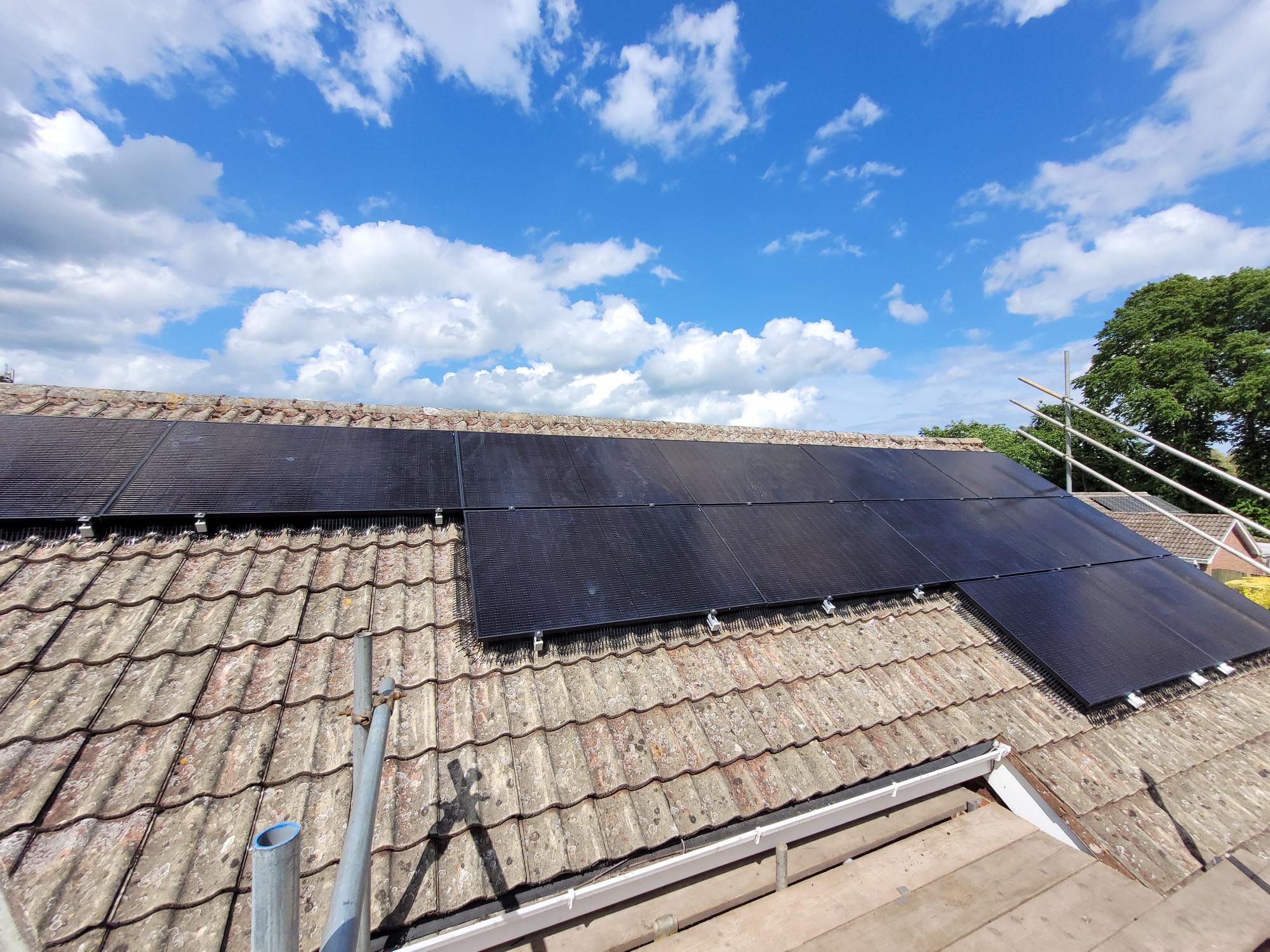
Working with Professionals and Legal Considerations
Hiring an MCS-certified installer and a reputable roofer ensures you meet every standard under UK solar panel building regulations. Under the MCS MIS 3002 installation standard, the installer “shall ensure the building is assessed by a competent professional experienced in solar photovoltaic systems to ensure that it is suitable for the installation.” Aspect holds MCS certification (NIC-600167), NICEIC approval, and RECC membership, alongside ISO 9001, ISO 14001 and ISO 45001 accreditations. At the end of a compliant installation you should receive a structural assessment (where required), a Building Regulations completion certificate, your MCS handover pack, electrical certification, and written DNO confirmation.
Roof Preparation: Coordinating roof replacement with solar mounting protects the structural membrane and flashing detail from the outset. VAT on qualifying residential solar installations remains at zero percent until 31 March 2027, making a combined roof and solar project particularly cost-effective right now.