

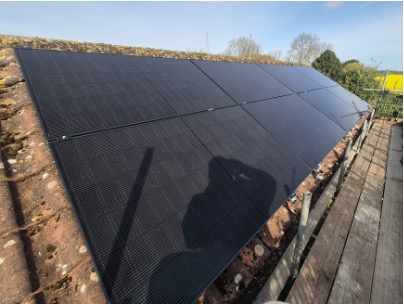
Aspect Group Services delivered a renewable energy upgrade for Sharrington Village Hall, installing a solar photovoltaic (PV) system with integrated solar battery storage in Norfolk. The goal was to cut energy costs, improve sustainability and provide long-term energy resilience for the community facility.
- Design, supply and installation of a roof-mounted solar PV system
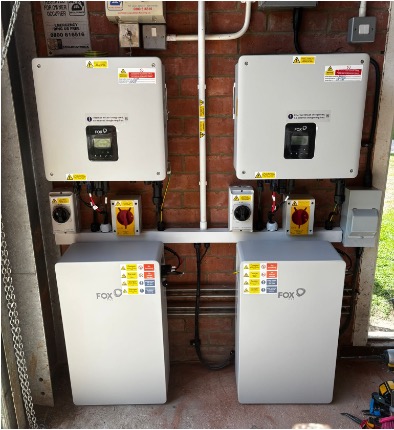
- Installation of battery storage and smart inverter technology
- Integration with existing electrical infrastructure
- Testing, commissioning and client handover
Solar Infinity modules
Total system capacity
FoxESS EP6 Plus battery storage
The system features 16 Solar Infinity 455W modules, delivering a total capacity of 7.28 kW. This is paired with a FoxESS EP6 Plus 11.52 kWh battery storage unit to capture and store generated electricity efficiently. Battery sizing at this scale reflects the load-profile assessment needed for community buildings. The latest Sheringham Shoal Community Fund reports show how energy projects, like those at Dilham Village Hall, benefit from storage when most electricity is used in the evenings.
The project was completed over three days, demonstrating our ability to work efficiently with minimal disruption to an active community space. Safe working practices were maintained throughout the live public environment.
The installation concluded with full testing, commissioning and certification under the MCS standards library, covering:
- PV installation standard — MIS 3002
- Battery storage standard — MIS 3012
- BS 7671 Amendment 4
- Combined G98/G99 grid connection assessment
- Battery fire regulations
The completed installation will reduce monthly electricity costs and grid reliance for Sharrington Village Hall. The battery storage allows the facility to use stored power during peak times or outages, boosting energy independence. If surplus electricity goes to the grid, the hall could earn payments through the Smart Export Guarantee (SEG).
Other local halls have seen meaningful results. Marham Village Hall saw its June electricity bill drop from £147.98 to £5.14 after a solar and battery installation alongside other efficiency upgrades. Individual results will naturally vary based on usage, occupancy and system size.
Frequently Asked Questions
What is the typical cost for solar battery storage Norfolk projects?
There is no single price for commercial or domestic installations. System size, electrical upgrades and battery capacity all affect the total. We offer solar and battery packages starting from £5,000, including installation and certification. Treat advertised prices as starting points, as site-specific surveys are always required.
Do solar panels work in winter and on cloudy days?
Yes, panels generate power from daylight rather than just direct sunshine. Winter output is lower because days are shorter and sunlight is less intense. A battery helps you use more of what you generate, but it cannot create energy. You can read more about this in the Energy Saving Trust solar facts. A well-designed system still offers meaningful year-round generation.
Do I need planning permission for village hall solar panels?
Domestic roof installations often fall under permitted development, but non-domestic buildings like village halls require careful checking. Conservation areas, listed buildings and unusual roof designs have stricter rules. You should always confirm requirements with your local planning authority before proceeding. Do not assume a community hall has the same rules as a typical house.
Is solar and battery installation VAT-free in 2026?
Current HMRC guidance states that qualifying installations of solar panels and batteries are zero-rated until 31 March 2027. This relief can include buildings used solely for a relevant charitable purpose, which is highly beneficial for village halls. Eligibility depends on the specific building details, so review the HMRC VAT Notice to confirm your status.